Viral or Invisible: The Impossible Choice Underground DJs Are Being Forced to Make
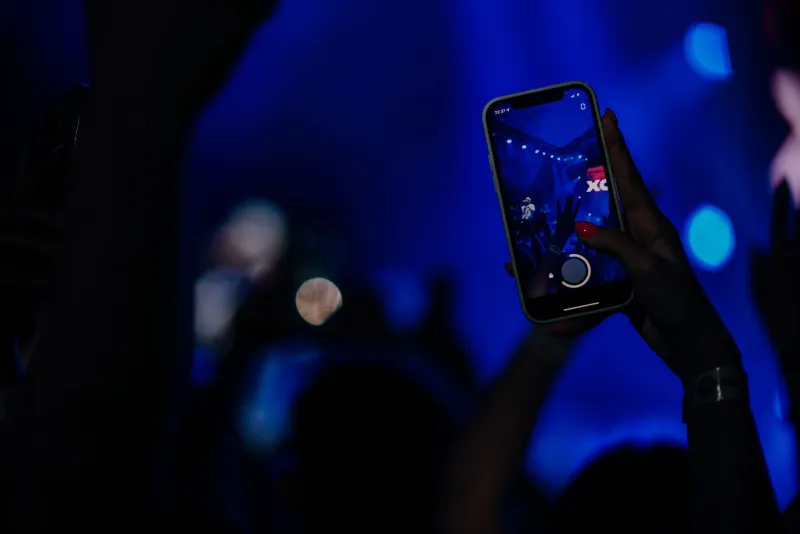
There's a moment every underground DJ seems to dread — the one where they check their analytics and realize a 30-second clip posted on TikTok got more plays than every set they've ever streamed combined. It should feel like a win. Often, it just feels complicated.
Welcome to electronic music in 2024, where the algorithm is simultaneously the most powerful booking agent in the game and the thing most likely to get you quietly exiled from the scene that built you.
The Math Doesn't Care About Your Credibility
Let's be direct about something the underground scene doesn't always like to say out loud: streaming numbers and social media reach now directly influence booking fees, festival slots, and label interest. Not as a secondary factor — as a primary one.
"I've had festival bookers ask me for my TikTok follower count before they asked about my music," says Nadia Osei, a Chicago-based house DJ who's been active in the city's underground scene for six years. "That's the reality. You can have ten years of residencies and a catalog that serious heads respect, and it means less than a video that went viral because someone used your track in a cooking tutorial."
This isn't unique to electronic music, but the stakes feel especially sharp in a genre that built its entire identity on anti-commercial resistance. House, techno, and their extended family of subgenres didn't start in stadiums — they started in Black and queer spaces in Chicago and Detroit specifically because the mainstream wasn't interested. The underground wasn't a stepping stone. It was the point.
Now the algorithm is knocking, and it's offering money.
The Mid-Tier Squeeze
The artists feeling this most acutely aren't the legends with decades of legacy protection, and they're not the brand-new TikTok-native DJs who built their audiences on short-form content from day one. The squeeze is sharpest for mid-tier artists — people with real scenes, genuine followings, and actual musical depth — who are now being told that none of that translates to the metrics that matter.
DJ and producer Marcus Webb, who operates out of Brooklyn and has released records on respected underground labels, describes it as a slow-moving crisis. "The labels I care about can't pay me enough to live in New York. The festivals that could pay me enough want to see numbers I don't have because I've never chased them. So you're either grinding residencies for not much money, or you're starting to think about Instagram content strategy, which is not why I got into this."
The financial pressure is real and it compounds quickly. Streaming pays fractions of pennies. Gigs at underground venues pay modestly. Without a viral moment or a growing social presence, mid-tier artists hit a ceiling — and the ceiling is low.
When the Fans Become the Problem
Here's where it gets genuinely messy: the underground fan base, the people who've been showing up to sweaty warehouse parties and buying records from local shops, often responds to an artist's mainstream breakthrough with something that looks a lot like grief. Or worse, betrayal.
"I had a track get picked up by a pretty big playlist, and my core fans were not happy," says Osei. "I got DMs telling me I'd changed, that the music was different — which it wasn't. The track had been out for a year. They just didn't like that new people were hearing it."
This is the gatekeeping paradox that lives at the heart of underground culture. Exclusivity is part of the value proposition. When something breaks through, it stops being exclusive — and some fans experience that as a personal loss, even when the music itself hasn't changed at all.
The irony is that this same gatekeeping culture can actively prevent artists from achieving the financial stability they need to keep making music. You can't sustain a career on the approval of a few hundred dedicated fans who resent the idea of you reaching a few thousand.
Does 'Selling Out' Still Mean Anything?
The concept of selling out was built for a different music economy — one where the choice between artistic integrity and commercial success was at least somewhat binary. You signed to a major or you didn't. You licensed your track to a car commercial or you refused.
The algorithm doesn't offer that kind of clarity. You don't sign a deal with TikTok. You just... post. Or you don't. And the decision to post — to optimize, to caption strategically, to chase sounds that are trending — happens in increments so small that it's easy to look up six months later and not recognize your own creative process.
"Selling out used to mean something specific," says DJ and music writer Terrence Alabi, who covers electronic music for several independent outlets. "Now it's more like a slow drift. Nobody wakes up and decides to become an algorithm DJ. It happens gradually, and by the time you notice, the underground crowd has already moved on without you."
That drift is the real threat — not the viral moment itself, but the creative decisions that pile up in pursuit of the next one.
Finding a Third Option
Some artists are trying to build something in between — maintaining underground credibility while using social platforms strategically rather than desperately. It's a narrow path, but it exists.
The approach tends to involve treating social media as documentation rather than performance. Posting the real thing — actual sets, actual studio sessions, actual creative process — rather than content engineered for engagement. It's slower. It doesn't always work. But it keeps the music at the center.
"I decided I'd rather grow slowly and stay myself than blow up and lose the plot," says Webb. "That might mean I never headline a major festival. I'm mostly okay with that. Mostly."
The word 'mostly' is doing a lot of heavy lifting there, and he knows it.
The tension between underground authenticity and algorithmic survival isn't going to resolve cleanly. The economy of electronic music is what it is. But the artists who figure out how to stay honest inside that tension — who keep making music that matters even when the metrics say something different — are the ones building something that lasts beyond the next trending sound.
The instant dance party is always looking for the next thing. The best DJs are the ones who make you forget you were ever looking.