Glow Up: How Rave Fashion Went From Underground to the Main Street
There was a time when strapping on a pair of chunky platform boots and wrapping yourself in a reflective silver bodysuit meant you were heading to a dark, sweaty warehouse somewhere off a highway exit. No GPS, just a flyer and vibes. That outfit was a signal — a secret handshake between people who knew. Now, that same look is sitting on the racks at Urban Outfitters, modeled by influencers who've never heard a 4 AM set in their lives. And honestly? We're not even mad about it.
Rave culture's aesthetic has gone fully mainstream, and the transformation has been wild to watch.
From the Dancefloor to the Sidewalk
Festival fashion has always had its own language. Coachella gave the world flower crowns and crochet sets. EDC brought out the LED-lit kandi kids. But somewhere between the pandemic shutdowns and the TikTok explosion that followed, something shifted. People who'd never set foot at a festival started wearing the uniform anyway — and not ironically.
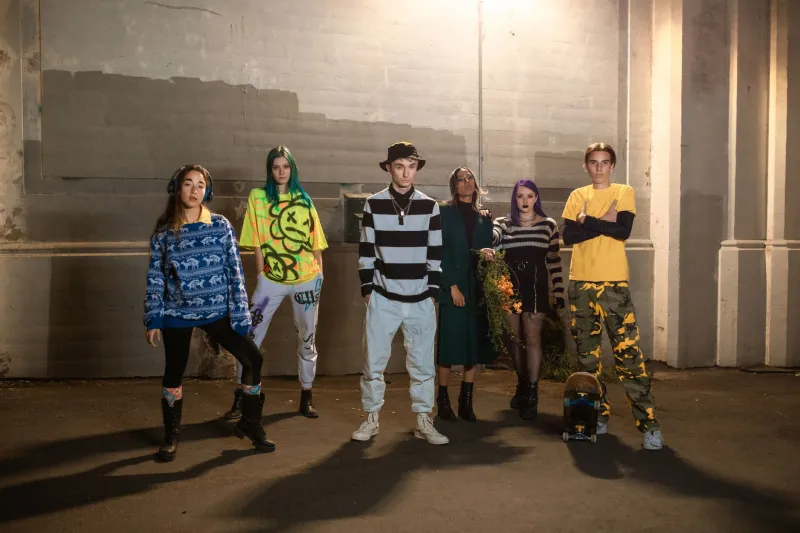
Holographic fabrics, iridescent mini skirts, neon co-ords, and chunky-soled footwear started showing up everywhere: brunch spots, college campuses, even corporate casual Fridays (okay, maybe not that last one, but give it time). The look jumped the velvet rope.
According to data from resale platforms like Depop and Poshmark, searches for terms like "rave outfit," "festival bodysuit," and "holographic jacket" have surged dramatically over the past three years, with Gen Z driving the bulk of that traffic. These aren't people buying costumes. They're building wardrobes.
Why Gen Z Is Buying In
We talked to a handful of festivalgoers at this past summer's circuit of events — from Chicago's Lollapalooza to Electric Forest in Michigan — about why they invest so heavily in what they wear.
"It's not just clothes," said Maya, 23, who estimated she spent close to $400 on her Electric Forest fit this year. "It's like, you're showing people who you are before you even say a word. The outfit is the vibe."
That sentiment came up again and again. For a generation that's grown up curating digital identities through Instagram grids and TikTok personas, the festival fit is just another extension of personal branding — one that happens to exist in physical space.
There's also the content angle. A killer outfit at a festival doesn't just live on your body for a weekend. It lives on your feed, in your Reels, in your BeReal archives. The return on investment goes way beyond the dancefloor. A single well-lit photo in a rhinestone set with the right backdrop can pull thousands of likes. That's not nothing.
"I definitely think about how stuff will photograph," admitted Jordan, 21, who was decked out in a chrome two-piece at Lollapalooza. "Like, I love the outfit, but I also know it's going to look insane in pictures, and that matters to me."
Brands Are Absolutely Paying Attention
Where Gen Z goes, brand money follows. Fast fashion giants like SHEIN and Fashion Nova have built entire festival sections into their sites, churning out body chains and UV-reactive sets at price points that make the look accessible to virtually anyone. But it's not just the fast fashion crowd cashing in.
Higher-end labels have been quietly pulling from rave aesthetics for years, and the mainstream has finally caught up to what the runways were already doing. Versace's reflective metallics, Balenciaga's platform everything, and countless streetwear drops featuring neon color-blocking all owe a debt to the underground.
Smaller, festival-specific brands have also had a serious moment. Labels like Yandy, Oh Polly, and a wave of Etsy-based designers specializing in custom festival wear have built loyal followings almost entirely through social media. One designer we spoke with, who runs a small handmade kandi and costume business out of Austin, Texas, said her sales tripled between 2021 and 2023.
"People want something that feels special and a little chaotic," she told us. "Festival fashion is one of the last places where more is more, and people are hungry for that."
The Authenticity Question
Of course, not everyone is thrilled about the crossover. There's a real tension in communities that built these aesthetics from scratch — ravers, LGBTQ+ club kids, underground electronic music devotees — watching their visual identity get scooped up and sold back to the masses without much acknowledgment of where it came from.
The platform boot, the body chain, the dramatic eye makeup — these weren't born in a trend report. They came from communities that used fashion as armor, as liberation, as a way to exist loudly in spaces that were theirs. When that gets commodified and stripped of context, it can sting.
But there's another read on it, too. Fashion has always moved this way — from subculture to mainstream, from underground to overground. And if anything, the explosion of interest in festival aesthetics has pushed more people toward the culture itself. Record numbers of young Americans are attending electronic music events. DJ culture is more visible than ever. Maybe the outfit is the gateway.
The Fit Is the Invitation
At the end of the day, the rave aesthetic's mainstream moment is complicated — like most things worth talking about. It's commercialized, yes. It's been flattened and mass-produced. But it's also brought a whole new wave of people to the dancefloor, dressed to the nines, ready to lose themselves in a bassline.
And if you ask us? That's not a bad thing. The party has always been for everyone. The fit just makes it official.