Drop It Like Science: What's Actually Happening in Your Brain When the Beat Hits

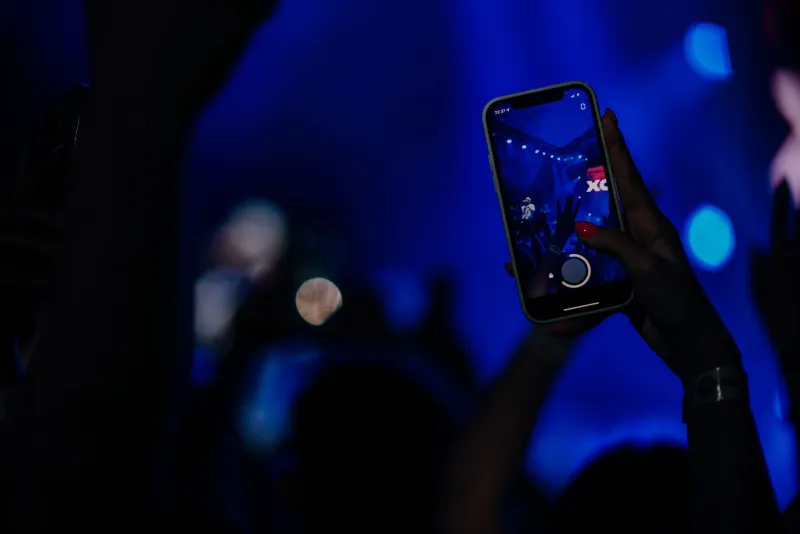
You know the feeling. The music pulls back, the crowd holds its breath, and then — boom. The bass drops and suddenly your arms are in the air, your feet are moving, and you have absolutely zero memory of deciding to do any of that. It just happened.
Welcome to one of the most fascinating intersections of biology and beats: the neuroscience of the DJ drop.
Your Brain Is Basically a Hype Machine
Before we even get into the studio techniques, let's talk about what's going down inside your skull. When a DJ starts building tension — stripping back layers, cutting the kick drum, letting a synth swell — your brain interprets that as a pattern that's about to be completed. Neuroscientists call this "predictive processing," and your brain is obsessed with it.
Dopamine, the feel-good chemical most people associate with food or social media likes, starts releasing before the drop even hits. Researchers at McGill University found that dopamine floods the brain during moments of musical anticipation — not just at the peak moment itself. That means the buildup is doing just as much neurological heavy lifting as the payoff.
For club-goers packed into a dark room with subwoofers rattling their ribcages, that effect is amplified by about a thousand. The shared anticipation of a crowd — thousands of people all holding the same breath — creates a feedback loop of collective tension that makes the eventual release feel almost euphoric.
How Producers Engineer That Moment
So how do DJs and producers actually manufacture this feeling in the studio? It's way more calculated than it looks.
One of the most common techniques is the "filter sweep" — gradually rolling off the high frequencies of a track so the sound becomes muffled and murky right before the drop. Your brain registers the loss of sonic information as a signal that something is coming. It's the audio equivalent of a horror movie going quiet right before the jump scare.
Then there's the "riser," that ascending synth or noise that climbs in pitch and intensity through the buildup. Producers like Skrillex, Diplo, and Four Tet have all talked about how risers function almost like a physical hand pushing the crowd upward — and it's not just metaphor. Research shows that ascending pitch patterns trigger a physical startle response in humans, priming the body for movement.
Low-end frequency placement is another massive piece of the puzzle. Sub-bass frequencies between 20 and 60 Hz don't just get heard — they get felt. The human body picks up these vibrations through skin and bone, not just ears. When a producer slams a 40 Hz sub into the mix at the drop, your chest literally vibrates. That's not an accident. That's engineering.
The 32-Bar Rule and Why Timing Is Everything
Electronic music has a built-in structural language, and experienced club-goers have absorbed it whether they realize it or not. Most dance music is built on 8-bar phrases, with major transitions happening at the 16 or 32-bar mark. This means regular club attendees have essentially been trained — Pavlov-style — to expect something significant every 32 bars.
Producers exploit this expectation constantly. Some drops land exactly on the 32-bar mark, satisfying the brain's craving for resolution. Others deliberately delay the drop by 4 or 8 bars, extending the tension until the crowd is practically screaming for release. That delay, that slight subversion of expectation, actually intensifies the dopamine hit when the drop finally arrives.
It's the same reason a joke with a longer setup often gets a bigger laugh. The brain rewards patience with a bigger chemical payoff.
Crowd Psychology: The Room Becomes One Organism
Here's where it gets really wild. The individual neurological experience of a drop is powerful on its own, but clubs and festivals create something called "entrainment" — the synchronization of biological rhythms across large groups of people.
When thousands of bodies are exposed to the same rhythmic pulse for an extended period, heartbeats, breathing patterns, and even brainwave activity begin to sync up. Studies on group drumming and communal music experiences have documented this for decades, but the effect is particularly intense in a club environment where the music is loud, the bass is physical, and the crowd is dense.
This is why a drop at a festival feels fundamentally different from listening to the same track through headphones. The crowd isn't just witnessing the moment — they're amplifying it for each other. Every raised arm, every shout, every burst of movement around you feeds back into your own response and intensifies it.
Experienced DJs read this energy in real time. The best ones in the game — think Fisher at EDC Las Vegas or Subtronics at Red Rocks — talk about feeling the crowd's energy as a physical thing they're actively shaping. They're not just playing records. They're conducting a biological experiment.
The Role of Surprise vs. Familiarity
One of the most interesting tensions in electronic music is between recognizing a track and being surprised by it. Both trigger dopamine, but through different pathways.
Recognition — hearing the opening notes of a track you love — hits the brain with an immediate reward. That's why a DJ dropping a classic anthem causes instant pandemonium. The brain says "I know this, I love this, reward incoming."
But surprise — an unexpected sample flip, a genre-bending mashup, a drop that doesn't land where you thought it would — triggers a different kind of dopamine response tied to novelty-seeking. It's the brain saying "I didn't see that coming, tell me more."
The best DJ sets play both sides of this constantly, alternating between familiar crowd-pleasers and unexpected curveballs to keep the brain cycling through different reward pathways. It's essentially a 90-minute neurological workout.
Why This Matters for the Dance Floor
Understanding the science behind why drops work doesn't make the magic disappear — if anything, it makes those moments even more impressive. The fact that a producer sitting in a studio in Los Angeles or Chicago can manipulate the neurochemistry of thousands of strangers simultaneously, just through careful arrangement of sound frequencies and timing, is genuinely remarkable.
Next time you're at a show and the drop hits and your body just goes — remember, you're not losing control. You're doing exactly what your brain was built to do. You're responding to music the way humans have responded to rhythm for tens of thousands of years.
It's just that now the shaman has a laptop and a Pioneer CDJ setup.
And honestly? That's a pretty incredible party.