After the Last Drop: Why Festival Friendships Fade and What the Ones That Last Have in Common
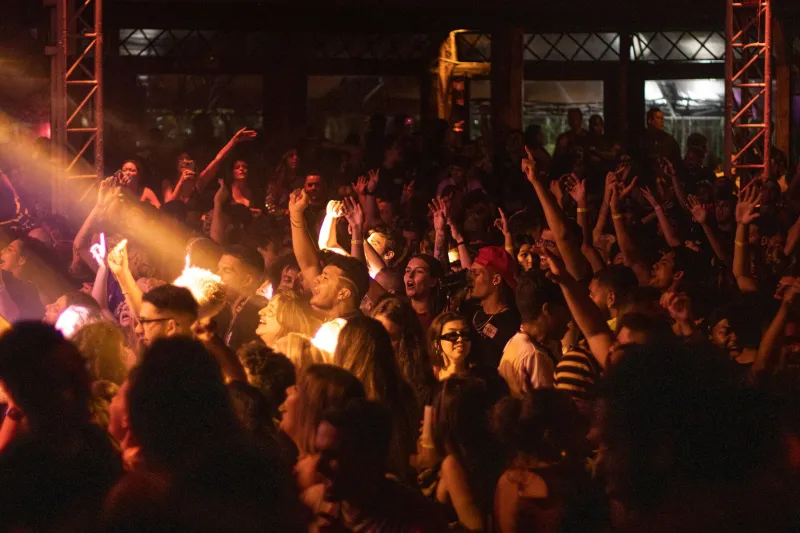
Ask any veteran festivalgoer about the best friendships of their life and at least one of them will start with a story that sounds like this: they met a stranger in a crowd, bonded over a shared moment during a set, and by the end of the weekend were exchanging numbers and making plans to reunite at the next event. Sometimes those plans happen. More often, they don't.
The festival friendship — intense, accelerated, and often bewilderingly deep for how short it is — is one of the defining social experiences of rave and festival culture. And its fragility is just as defining as its intensity. Understanding why these connections form so powerfully, and why so many of them evaporate once the stages go dark, says a lot about both human psychology and the particular kind of community that festival culture creates.
Why the Dancefloor Bonds So Hard
There's actual science behind why strangers become fast friends at festivals, and it starts with the environment itself. Loud music, shared physical movement, sensory intensity, and the suspension of normal social hierarchies create conditions that psychologists associate with accelerated bonding. Researchers call it "collective effervescence" — a term coined by sociologist Émile Durkheim to describe the feeling of energy and connection that emerges when people share a ritual experience together.
On a festival floor, the ritual is the music. The shared drop, the moment a crowd erupts together, the collective surrender to a DJ's control — these experiences create a sense of "we" that bypasses the slow accumulation of trust that normally characterizes friendship. You haven't known this person for long, but you've experienced something with them. That's a powerful shortcut.
Add to that the fact that festivals are, by design, removed from the structures of ordinary life. There's no work tomorrow. There's no traffic to sit in. The usual social scripts — what you do, where you live, how much you earn — feel less relevant when you're all just people in a field with the same wristband on. The leveling effect is real, and it makes people more open, more vulnerable, and more willing to connect than they'd typically be at a house party or a bar.
The Fade: What Happens When the Wristband Comes Off
So why do so many of these connections dissolve? The honest answer is that the conditions that created them don't exist in ordinary life, and without those conditions, the friendship has to be rebuilt on different terms — terms that a lot of people never explicitly negotiate.
"It's like you meet someone in a dream and then you both wake up," says Janelle, a 29-year-old from Houston who's attended Bonnaroo six times. "The version of you at a festival isn't your full self. It's a real part of you, but it's a specific part. And when you get home, all the other parts come back."
The psychology here is well-documented. Context-dependent relationships — connections that form in specific environments — often struggle to transfer to different settings. The friend you made at summer camp, the coworker you bonded with on a business trip, the person you met on a long flight: these relationships frequently fade not because the connection was fake, but because the context was doing a lot of the relational heavy lifting.
Festival friendships carry an additional complication: they're often formed in conditions that are emotionally heightened in ways that everyday life simply isn't. The contrast between the intensity of the weekend and the ordinariness of a Tuesday morning text exchange can make the friendship feel less real in retrospect, even when it wasn't.
The Crews That Actually Last
But some of them do last. Festival squads that have been riding together for five, ten, fifteen years are a real thing, and the people inside them will tell you exactly what makes their crew different from the ones that dissolved.
The common thread isn't frequency of contact — it's intentionality. Crews that survive are the ones where at least a few members actively work to maintain the connection outside of festival season. A group chat that stays active between events. A tradition of meeting up for a local show or even just dinner in the off-season. The willingness to show up for each other when the music isn't playing.
"We have a rule," says Marco, a 34-year-old from Miami who's been going to festivals with the same core group for eight years. "Every fall, when the festival season ends, we do one regular night out together. No camping, no lineups, just us. It sounds simple but it's the reason we're still close."
Another factor is honesty about expectations. Festival friendships that survive tend to be ones where people were explicit — even if just casually — about wanting to stay in touch, and then actually followed through. The ones that fade are often the ones where both parties assumed the other would reach out first, and neither did.
How to Actually Keep the People You Find Out There
If you've lost count of how many festival connections you've watched evaporate, here are a few things that people who've cracked this problem consistently do differently.
Exchange something more than an Instagram follow. A follow is passive. A phone number, a real name, a direct message with a specific plan — these require more effort and signal more genuine intent.
Make a specific plan before you leave. "We should hang out sometime" is not a plan. "There's a show at [venue] next month — let's go" is a plan. Specificity is the difference between a connection that continues and one that becomes a fond memory.
Accept that not all of them are supposed to last. Some festival friendships are complete in themselves. The weekend was the whole thing, and that's okay. Not every person you connect with deeply is meant to be in your long-term life. Recognizing that takes the pressure off and lets you appreciate the temporary connection for what it was.
Put in asymmetric effort if you have to. If you want to keep a friendship alive, sometimes you have to be the one who reaches out more. That's not a sign the connection is one-sided — it's just a sign that you value it.
Festival culture is built on the idea that music creates community. And it does — sometimes for a weekend, sometimes for a lifetime. The dancefloor will always do its part. What happens after the last drop is up to you.