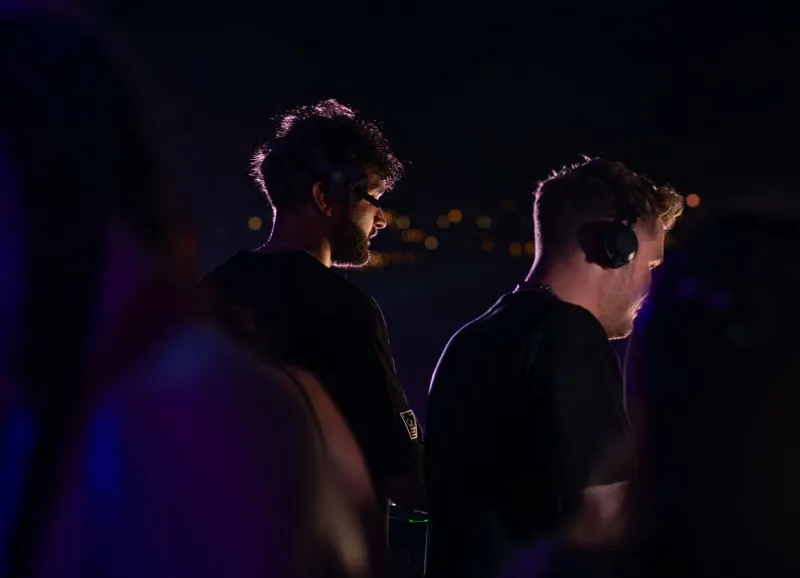
Stepping Off the Floor: The Rise of the Raver on Pause
Ask anyone who's been going to shows for more than five years and they'll probably tell you the same thing: there was a moment — maybe on a Sunday morning in a festival field, maybe on a Tuesday after a late club night — when the math stopped adding up. The cost of the ticket. The cost of the Uber. The cost of the next three days spent recovering. And somewhere in that haze, a quiet question started forming: Is this still worth it?
For a lot of people right now, the answer is turning into a reluctant "not right now."
The Burnout Nobody Talks About
Dance music culture doesn't have a great vocabulary for taking a break. The whole ethos is built around showing up — to the warehouse, to the festival, to the after-hours spot, to the next city's lineup. Stepping back feels like a betrayal of the community, or worse, like admitting you've gotten old.
But the reality is that a significant number of longtime fans are doing exactly that, quietly and without much fanfare. They're deleting the festival apps, skipping the presale alerts, and choosing a full night's sleep over a 2 a.m. DJ set they'd be too exhausted to fully appreciate anyway.
"I didn't quit the scene," says Jamie Okafor, a 31-year-old from Atlanta who spent most of her twenties as a regular at clubs and festivals across the Southeast. "I just... stopped for a while. And the longer I stopped, the harder it was to explain why I'd been going so hard in the first place."
Jamie's experience is increasingly common, and the triggers are more varied than you might expect.
The Ticket Price Problem
Let's start with the most obvious one. Festival ticket prices in the US have climbed steadily for years, and the post-pandemic era brought increases that genuinely shocked even veteran attendees. What used to cost $150 for a weekend pass at a mid-size festival now routinely runs $350 or more before fees — and that's before you factor in camping, transportation, food, and whatever else you're spending inside the gates.
For fans in their mid-to-late twenties dealing with student loans, rising rent, and the general financial reality of American life in 2024, the math has become genuinely difficult to justify. And when you do spend that money, the pressure to have the experience of a lifetime — to get your money's worth — can itself become exhausting.
"I spent $400 on a festival weekend last summer and I was so stressed about having a good time that I barely did," says Derek Castillo, a 28-year-old from Phoenix. "At some point I realized I was working a side gig to afford something that was making me anxious."
The Documentation Trap
Social media was supposed to help fans connect with the music and each other. In practice, for a lot of people, it's become another source of pressure in a night that already has plenty of it.
The expectation to document — to capture the perfect video of the drop, to post the crowd shot, to share the set list — pulls people out of the present moment in ways that accumulate over time. When you're watching a show through your phone screen more than you're actually watching it, something has gone sideways.
"I'd come home from a festival with 200 videos I never watched again and feel completely empty," says Priya Nair, a cultural commentator and longtime electronic music fan based in Brooklyn. "The experience had become content before it was even finished being an experience."
Nair took a deliberate six-month break from live events last year. She describes it as the most important thing she did for her relationship with music. "I started listening again — actually listening — instead of just consuming."
Physical Recovery Is a Real Conversation
Here's the thing nobody in their early twenties wants to hear but everyone in their late twenties eventually figures out: your body keeps score. Long festival weekends, late club nights, disrupted sleep cycles, and the physical demands of hours of dancing add up in ways that take longer to recover from with every passing year.
This isn't about substances or drinking — it's just basic physiology. A 22-year-old can go hard for three days and feel fine by Wednesday. A 30-year-old is looking at a full week of suboptimal functioning, and increasingly, that trade-off is becoming harder to accept.
Physical recovery is one of the most commonly cited reasons fans mention when they talk about pulling back from the scene, and it's one of the least discussed publicly because it bumps up against the culture's self-image as timeless and ageless.
What Sustainability Actually Looks Like
The good news — and there genuinely is good news here — is that most of the people stepping back aren't stepping away forever. What they're doing is recalibrating, figuring out what a sustainable relationship with the scene actually looks like for their life right now.
For some, that means being more selective — one or two festivals a year instead of five, chosen for artists they genuinely love rather than lineups that look impressive on paper. For others, it means leaning into the music itself more than the live experience — building playlists, exploring mixes, going deeper into genres rather than wider across events.
"I still love this music more than almost anything," Jamie says. "I just love it differently now. I don't need to prove that love by being at every show."
Longtime DJ and producer Kira Solano, who has watched crowds evolve over fifteen years of performing, sees the trend as ultimately healthy. "The people who burn out and come back are better listeners," she says. "They've figured out what they're actually there for."
The Scene Needs This Conversation
If the dance music world is going to sustain itself across generations, it needs to make room for the idea that taking a break isn't the same as giving up. The culture's tendency to celebrate relentless participation — to treat showing up as the ultimate virtue — doesn't serve everyone, and it definitely doesn't serve people who are quietly struggling to keep up.
The floor will still be there when you're ready to come back. And honestly? You'll probably enjoy it more when you do.